

 |
 |
 |
 |
 |
|
|
|
|
|

Recurring skin rashes, itching, redness, and urticaria attacks are often not just surface-level problems. The skin is closely related to immune regulation, vascular permeability, inflammation, and gut health. In this content, we examine histamine intolerance and common skin diseases from an internal medicine and functional medicine perspective.
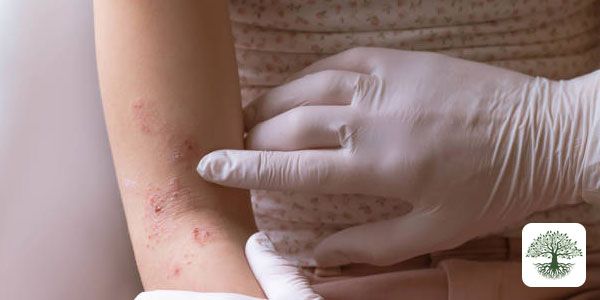
The skin is the body's largest organ and should not be evaluated merely as a surface in contact with the external environment. From an internal medicine and functional medicine perspective, the skin is an active organ in constant interaction with the immune system, vascular structures, nervous system, and metabolic balance. Therefore, findings that appear on the skin often carry important clues about the body's internal balance.
In addition to being a powerful barrier, the skin is an important part of the immune response. It forms the first line of defense against environmental exposures, microorganisms, and chemical stimuli.
Chronic redness, recurring rashes, persistent itching, or frequent infections may indicate not just a problem specific to the skin itself, but a systemic burden. In these cases, the skin becomes the outlet for imbalances developing in other areas of the body.
The lesions visible in skin diseases are often the final stage. Itching, redness, or rashes appear as a result of the underlying process. For this reason, in the functional medicine approach, the goal is not only to suppress the finding on the skin but to properly evaluate the foundation that leads to this finding.
Although skin diseases present with different clinical appearances, similar biological mechanisms often underlie these conditions. In internal medicine and functional medicine approaches, the goal is to understand and evaluate these common processes before the name of the disease.
In many skin diseases, there is a low-level but persistent inflammatory process. This condition can lead to increased sensitivity in the skin, disruption of barrier integrity, and delayed healing.
The skin is in direct contact with the immune system. Excessive or imbalanced functioning of the immune response plays an important role in urticaria, eczema, psoriasis, and allergic skin diseases.
Healthy skin has a strong barrier structure. Weakening of the barrier can cause environmental triggers and allergens to pass through more easily. At the same time, increased vascular permeability can increase skin findings characterized by redness and edema.
Identifying common mechanisms does not mean evaluating every patient under the same heading. On the contrary, the functional medicine approach aims to understand how and with what intensity these mechanisms work in each individual. Thus, a personalized roadmap that will support treatment can be created.
Histamine intolerance is a condition that occurs as a result of increased histamine load in the body or insufficient breakdown of histamine. Since the skin is one of the most sensitive organs to histamine, this load increase often first manifests itself with skin findings. In the functional medicine approach, histamine intolerance is not evaluated as a single allergic condition but as a reflection of immune, gut, and inflammation balance.
Histamine is a natural mediator that plays a role in immune response, vascular permeability, and nervous system signaling. Under normal conditions, it is produced and broken down in a balanced manner. However, when this balance is disrupted, histamine can cause prominent complaints, especially in the skin.
When histamine load increases or histamine breakdown is insufficient, skin findings can show a variable and repetitive course.
In the functional medicine approach, histamine intolerance is not reduced to a single food or a single trigger. The main focus is the total histamine load created together by nutrition, gut health, stress level, and accompanying inflammation. Therefore, the evaluation is aimed not only at suppressing the symptom but at understanding the foundation that increases this load.
Internal Medicine, Functional Medicine
|
|
|
|
|
Küçükbakkalköy Mah., Sarı Lale Street
Ulugöl Plaza No:1, Interior Door No:10
Ataşehir, Istanbul, Turkey
Monday - Saturday: 08:30 AM - 06:30 PM
Dr. Pınar Sarıyıldız
Communication Coordinator
Is there anything I can help you with?.
09.00